The Science of ADHD Nervous System Regulation: Moving Beyond Anxiety
To regulate an ADHD nervous system, you must shift from "mental" coping to "somatic" grounding. Because our brains are wired for high stimulation, we often live in a state of chronic sympathetic nervous system activation (fight or flight). Regulation isn’t about being "calm"; it’s about having the tools to move your body from a state of high-alert back into a "rest and digest" safety zone through cold exposure, heavy work, and rhythmic movement.
If you have a Busy Brain, you’re likely intimately acquainted with that low-level hum of electricity under your skin. It’s that feeling that you’ve forgotten something important, even when your calendar is clear. Or that "itch" that makes sitting through a long meeting feel like physical torture. We usually call this "anxiety," but for many of us, it’s actually a dysregulated nervous system.
Our brains are essentially high-performance engines with "neurotypical" cooling systems. We take in more sensory data, feel emotions more intensely, and struggle to filter out the "noise" of the world. By the time lunch rolls around, our nervous system isn't just tired—it’s blown a fuse.
The "Fight, Flight, or Freeze" Loop
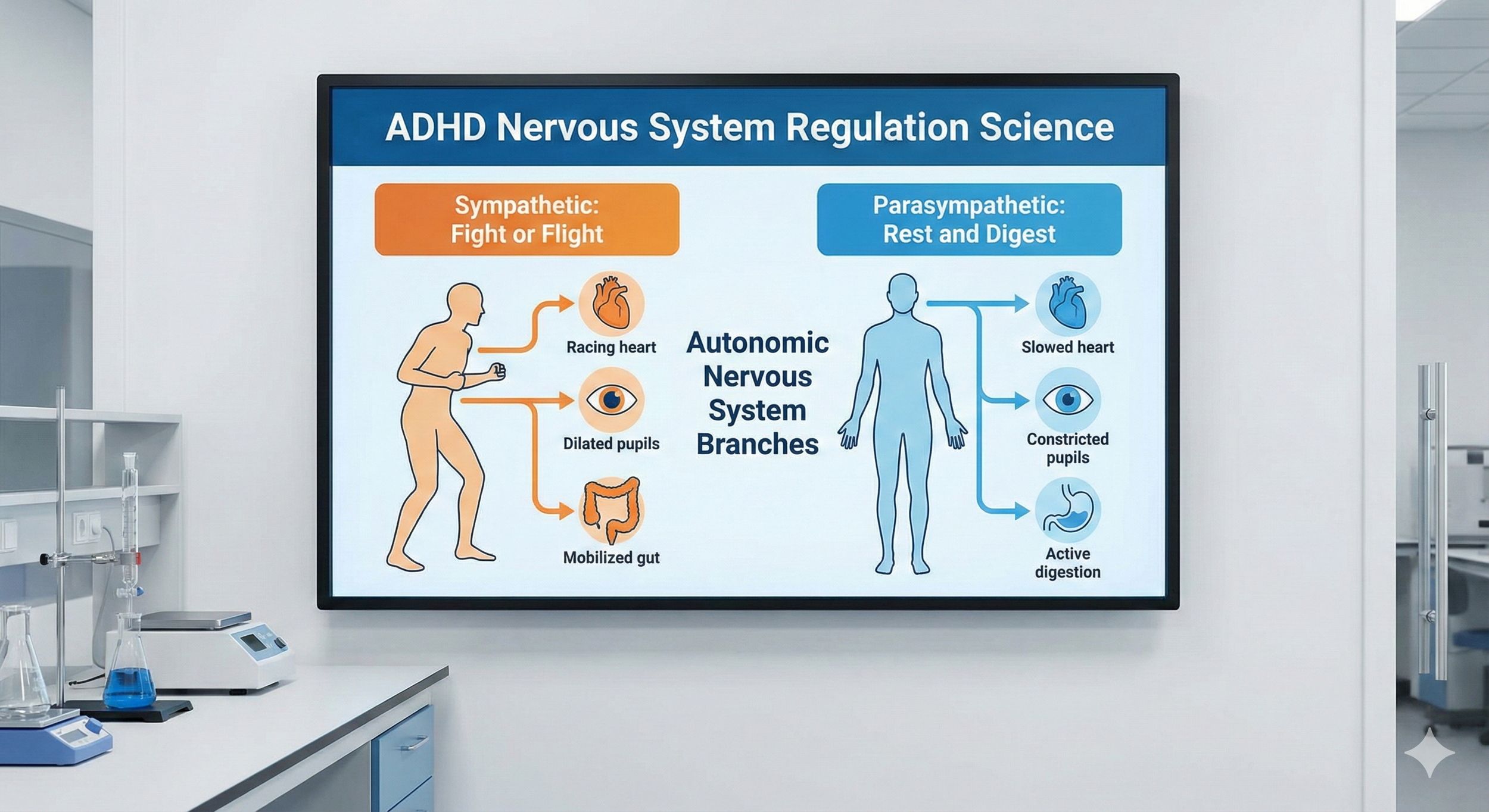
A clean, educational graphic that contrasts the "Fight or Flight" response with the "Rest and Digest" state. The composition uses cool blues and warm oranges to differentiate the two states, helping the reader visualize their internal physiology.
Why It’s Not "Just in Your Head"
When we talk about executive dysfunction, we usually focus on the prefrontal cortex. But the nervous system is the foundation that the prefrontal cortex sits on. If your body thinks it’s being chased by a predator (even if that "predator" is just a mounting pile of unread emails), your brain will prioritize survival over "focus." This is why you can’t "logic" your way out of ADHD paralysis. You can’t think your way into focus if your body is convinced it’s in danger.
The ADHD Sensory Paradox
Most advice for "calming down" involves dim lights and silence. But for many Busy Brains, silence is actually under-stimulating, which the brain interprets as a different kind of threat. Regulation for us often looks like "heavy work"—pushing against a wall, lifting something heavy, or even loud, rhythmic music. We don’t need less input; we need the right kind of input to tell our brain, "Hey, we’re safe. You can power down the alarm now."
Somatic Tools for the Busy Brain
In 2026, we’re moving beyond deep breathing (which, let’s be honest, can sometimes make ADHDers feel more frustrated). We’re looking at Somatic Regulation—using the body to talk to the brain.
Temperature Spikes: A splash of ice-cold water on the face triggers the "Mammalian Dive Reflex," which instantly slows the heart rate and resets the nervous system. It’s like hitting the "restart" button on a frozen laptop.
Proprioceptive Input: Weighted blankets or "compression" gear provide the brain with a clear map of where the body ends and the world begins. This "grounding" reduces the floaty, untethered feeling of a dysregulated mind.
The Vagus Nerve Hack: Hum, sing, or gargle. The vagus nerve passes right by the vocal cords; the vibration stimulates the parasympathetic nervous system, signaling your body to move into "Rest and Digest" mode.
Conclusion
Understanding your nervous system is the ultimate act of self-compassion. When you stop asking "Why am I so anxious?" and start asking "What does my nervous system need to feel safe?", the world starts to feel a lot smaller and more manageable. You aren't broken; you're just highly tuned.
Do you find yourself in "Fight" (irritability), "Flight" (distraction), or "Freeze" (paralysis) most often? Knowing your default state is the first step to hacking it. Let’s talk about our "safe" sensory inputs in the comments.