How to Build a 2026 ADHD Reset Routine That Actually Sticks
The secret to an ADHD-friendly 2026 routine is simple: stop trying to fix your brain and start building a world that accommodates it. By prioritizing "dopamine-first" momentum, externalizing your memory with visual cues, and embracing the "Mise en Place" rule (put it away, not down), you can create a daily rhythm that feels like a support system rather than a cage.
We’ve all been there. It’s January 1st, and the "New Year, New Me" energy is vibrating at a frequency our busy brains find intoxicating. We buy the planners with the gold-leaf edges. We download the habit trackers. We promise ourselves that this is the year we finally become the person who meditates for twenty minutes before a green smoothie. But by January 10th, the planner is a coaster, and the green smoothie is an science experiment in the back of the fridge.
The problem isn't your willpower; it’s that most resolutions are built for neurotypical brains. For us, a routine shouldn't be a rigid set of rules it should be a soft place to land. This year, we’re doing a "Non-Resolution Reset." We’re looking at the year ahead through the lens of executive function, sensory needs, and the very real need for dopamine.
Designing for "Dopamine-First" Momentum
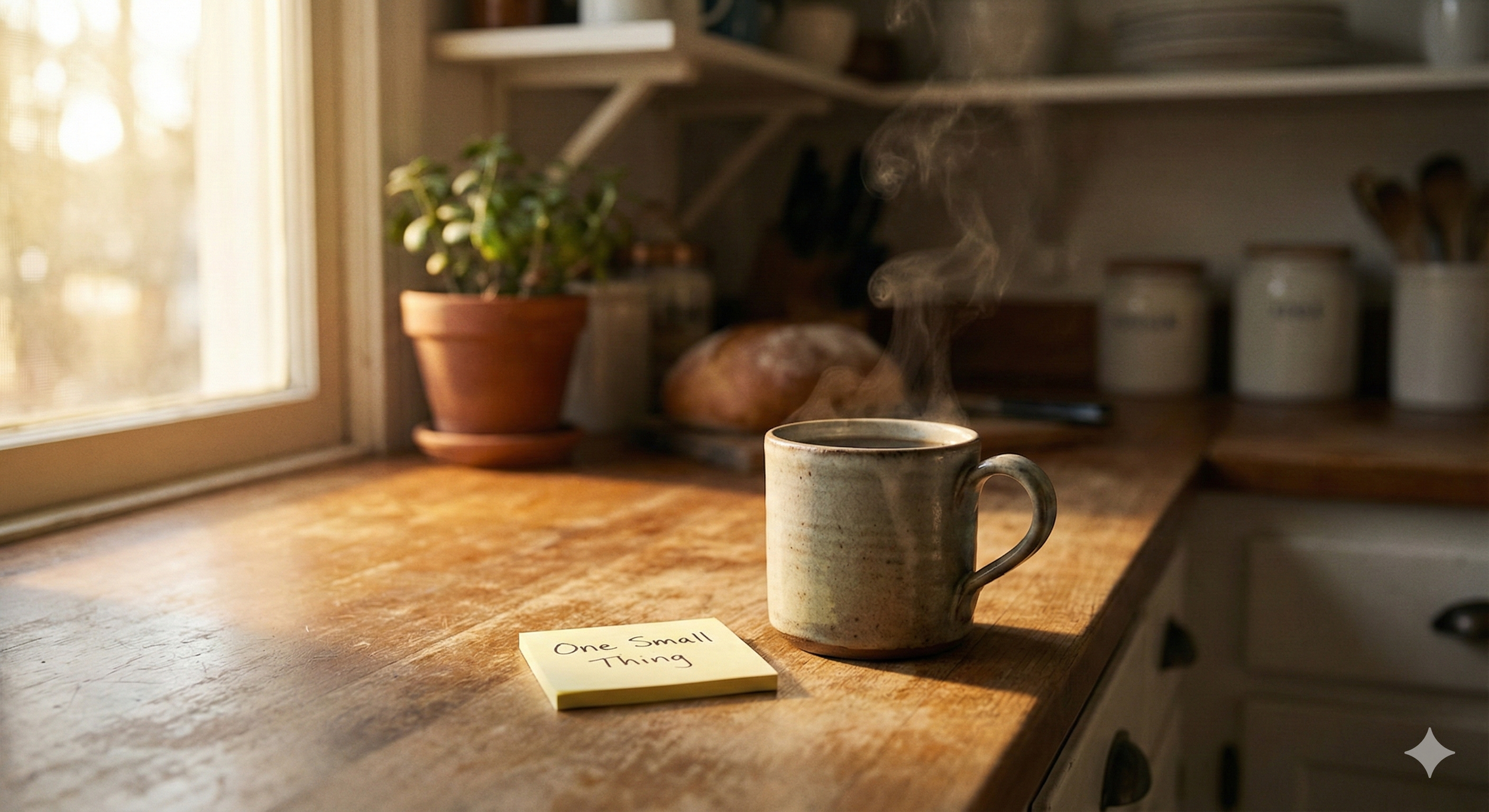
This image uses a shallow depth of field to focus on the steam rising from a ceramic mug, creating a sense of calm and presence. The lighting is warm and natural, avoiding the sterile look of typical productivity photography.
Forget "Eating the Frog"
Traditional productivity gurus tell you to do the hardest task first. For a busy brain, that’s a one-way ticket to task paralysis. If I start my day with taxes, I will end my day staring at a wall for six hours. Instead, we’re practicing "dopamine menuing." Start with one small, high-reward task that makes your brain feel "awake." Whether it’s five minutes of a favorite podcast or finally putting away that one stack of mail, that initial win creates the momentum needed to tackle the bigger, "boring" stuff later.
The "Mise en Place" Philosophy for Life
In the kitchen, mise en place means "everything in its place." For those of us with ADHD, our environment is often a reflection of our internal "noise." The rule for 2026 is: Don't put it down, put it away. It sounds simple, but it’s a radical act of self-care for your future self. By reducing visual clutter, we reduce the "background processing" our brains have to do just to exist in a room. It’s not about being a neat freak; it’s about lowering the sensory tax we pay every time we walk into the kitchen.
Externalizing the "Internal Monologue"
We can't rely on our working memory, it’s like a browser with too many tabs open and half of them are frozen. In 2026, our routine relies on externalizing everything. If it isn't written down, visible on a whiteboard, or set as an automated alert on a wearable, it doesn't exist. This isn't "failing" at being an adult; it’s using the tools available to bridge the gap between our intentions and our actions.
Embracing the Messy Reset
Some days, the routine will break. The "Busy Brain" reality is that life is non-linear. A successful 2026 reset includes a plan for the "re-entry." When you fall off the wagon, don't beat yourself up for being "broken." Just pick one small thing, the smallest possible thing, and start there. Your brain isn't a project to be solved; it’s a landscape to be navigated with a little more grace and a lot less shame.
Conclusion
Building a routine for the brain you actually have means trading "shoulds" for "supports." As we move into 2026, let's stop chasing perfection and start chasing a day that feels just a little bit easier to breathe in.
Do you have a "non-negotiable" that helps you reset when the chaos gets too loud? Hit reply or leave a comment, I’d love to hear your "One Small Thing" for the new year.