ADHD in the Modern Workplace: Navigating Sensory Needs and Inclusion
To thrive in the modern workplace with ADHD, you must prioritize sensory management and clear communication regarding executive function needs. Navigating a professional environment requires moving beyond traditional productivity to advocate for "micro-accommodations" like noise-canceling technology, flexible deep-work blocks, and written-first communication to reduce the cognitive load of a neurotypical office.
For many in the Busy Brain community, the "modern" workplace is a sensory minefield. The open-plan office—once hailed as a hub for collaboration—is often a nightmare for those of us with a high-performance, low-filter nervous system. Every fluorescent light flicker, every distant conversation about weekend plans, and every "quick ping" on Slack is a withdrawal from our very limited bank of executive function.
By 2026, the conversation around neuro-inclusion is shifting. It’s no longer about "fitting in"; it’s about "functioning well." To do that, we have to stop treating our sensory needs as a nuisance and start treating them as the baseline requirements for our best work.
The Sensory Tax of the Open Office
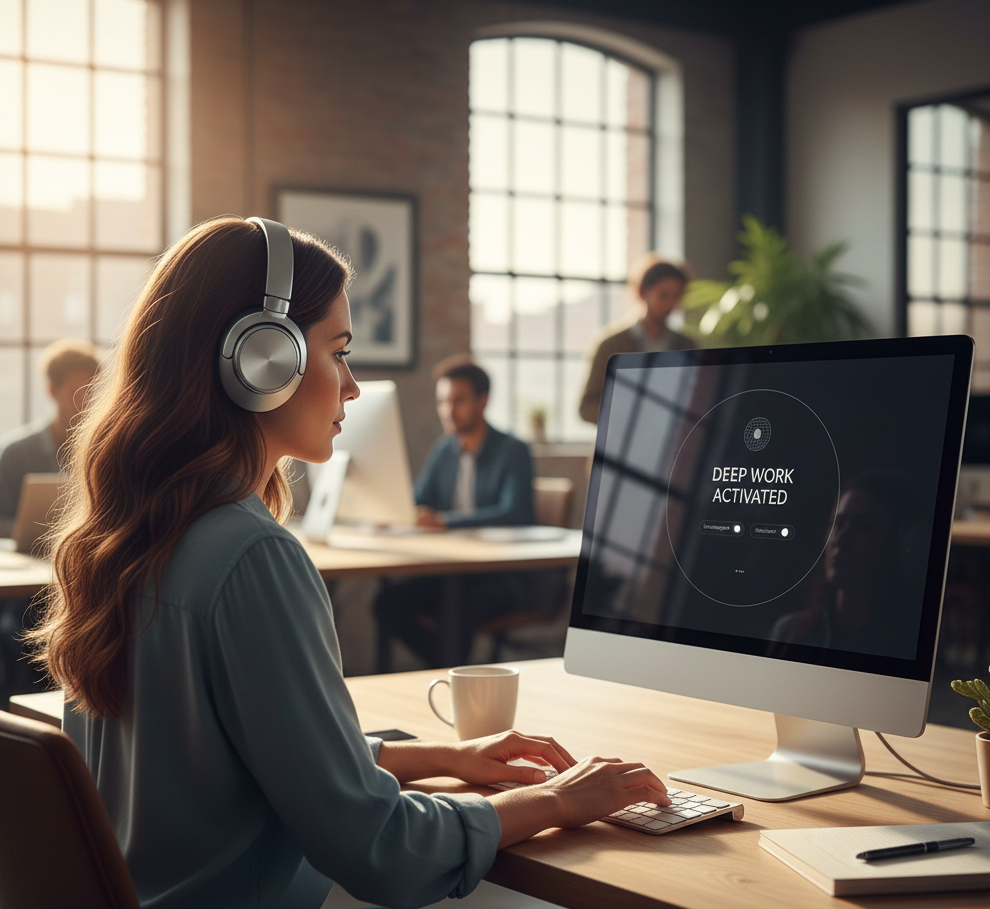
A professional in a modern office wearing noise-canceling headphones to focus on work.This high-resolution image captures the "Social Anchor" effect. The lighting is bright but soft, emphasizing a serene "bubble of focus" within a busy corporate environment.
The Cost of Context Switching
The biggest threat to ADHD productivity isn't a lack of desire; it’s the cost of context switching. Every time an impromptu meeting breaks your flow, it can take a Busy Brain up to 20 minutes to fully re-engage with the task at hand. In a typical 8-hour day, three "quick questions" can effectively delete an entire afternoon of deep work. Inclusion in 2026 means respecting "Do Not Disturb" modes as a legitimate medical necessity, not a suggestion.
Sensory Overload and "The Hum"
We often pay a "Sensory Tax" just to sit at our desks. Fluorescent lighting can trigger a subtle "fight or flight" response in neurodivergent brains, leading to irritability and fatigue by 3:00 PM. Managing your workplace sensory needs involves auditing your environment: Can you move to a desk with natural light? Can you use a fidget tool under the desk to regulate your nervous system during long calls?
Navigating 2026 Accommodations
Image PromptSEO Image TitleALT TextImage DescriptionClose-up of a digital dashboard showing a "Focus Mode" icon with a clean, minimalist interface. A hand is gently clicking a mouse. Warm, soft studio lighting.Digital ADHD Workplace AccommodationsA close-up of a computer screen showing a focus mode setting to minimize digital distractions.This image represents the "Digital Guardrail" strategy. The composition is clean and focused, using warm tones to convey a sense of control and technological support.
Designing Your "Micro-Accommodations"
You don't always need a formal HR document to change how you work. Some of the most effective 2026 inclusion strategies are "micro-accommodations" that you can implement yourself:
Written-First Communication: Request that all "quick chats" involving tasks be followed up with a brief bulleted email. This externalizes your working memory and reduces the anxiety of "forgetting the middle step."
The "Body Doubling" Virtual Room: Use co-working digital spaces to work alongside others in silence. This provides the social pressure to stay on task without the sensory chaos of a physical office.
Asynchronous Deep Work: Negotiate for blocks of time where you are not expected to be "available" on messaging apps. This protects the hyper-focus state that is often an ADHDer's greatest professional asset.
Conclusion
The goal of neuro-inclusion isn't to make everyone work the same way; it’s to ensure everyone has the tools to produce their best results. When we advocate for our sensory needs, we aren't asking for a favor—we are optimizing the "Busy Brain" engine for the marathon of a professional career.
Does your current workspace feel like it supports you, or like you're fighting against it? I’d love to hear about the one "small change" you’ve made to your desk or your schedule that actually moved the needle.